Permanent vs removable retainers: which is right for you?
By Mia Clark · Updated June 2026 · 10 min read
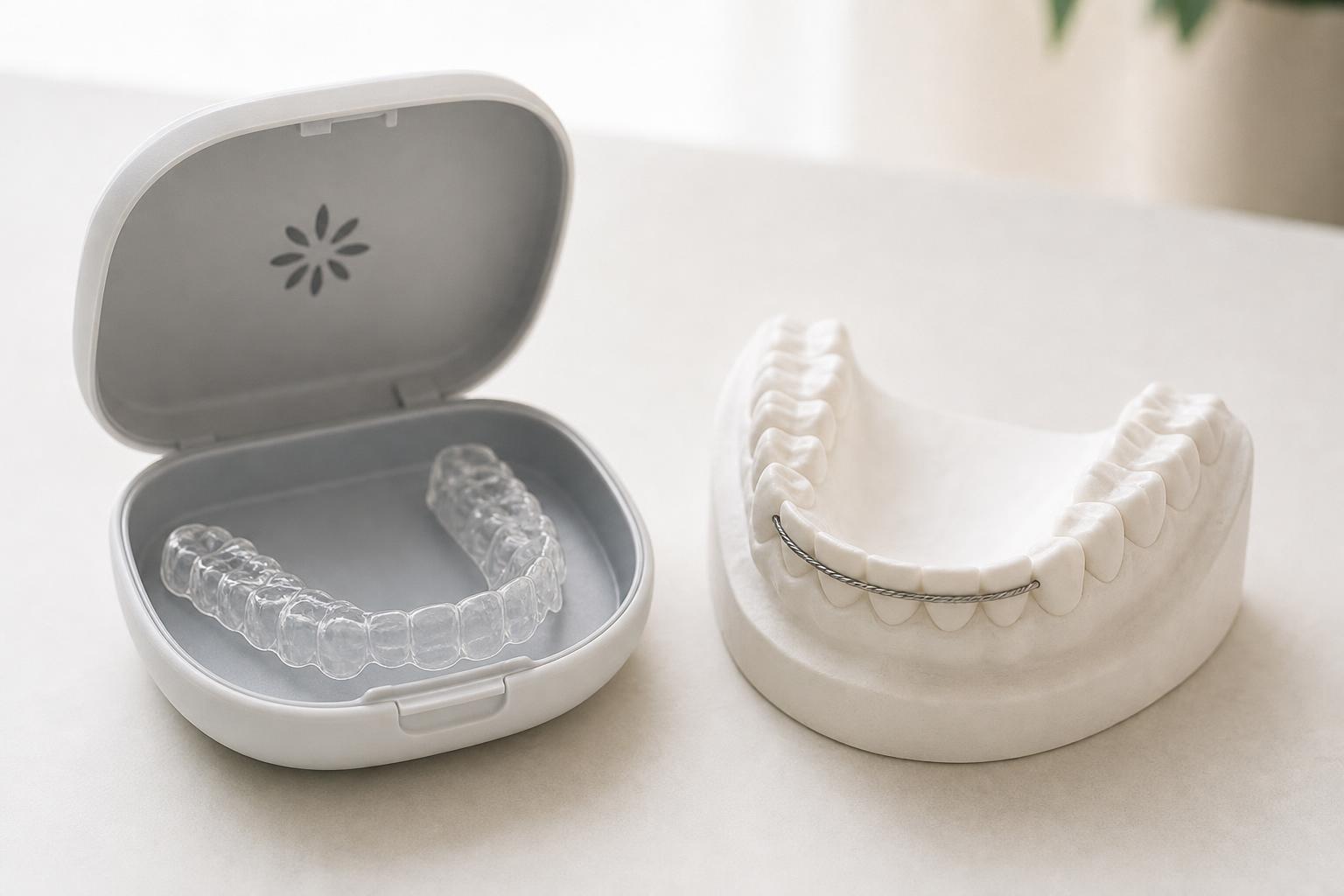
Once your braces or aligners come off, the real long term work begins. Retainers hold your teeth in their new position while the surrounding bone and gum settle. There are two main options, and the choice between them shapes the next decade of your dental routine. This is an honest, side by side look at permanent bonded retainers and removable retainers, written for people choosing for the first time and for adults thinking about replacing an old one.
Direct answer
A permanent bonded retainer is a thin wire glued to the back of your front teeth. It works 24 hours a day with no effort from you, but it requires careful flossing and can break or detach. A removable retainer is a clear plastic tray or a wire and acrylic plate you take out to eat and clean. It is easier to keep clean but only works when worn. Most orthodontists today recommend a hybrid plan, often a bonded retainer on the lower front teeth and a removable retainer for the upper teeth, worn at night long term.
What a permanent retainer actually is
A bonded retainer is a single piece of braided stainless steel or fibre reinforced wire. The orthodontist polishes the back of your front teeth, applies a small dab of dental composite to each tooth and presses the wire into the composite before curing it with a blue light. The whole process takes around 20 to 40 minutes per arch. You leave the appointment with the retainer already at work.
What a removable retainer actually is
Removable retainers come in two common forms. Clear plastic retainers, sometimes called Essix or Vivera, look very similar to clear aligners but are slightly thicker and made of a more durable material. Traditional Hawley retainers are an acrylic plate that sits against the roof of the mouth or behind the lower teeth, with a visible wire across the front. Both types are taken out for meals, brushing and contact sports.
Side by side comparison
| Factor | Permanent (bonded) | Removable |
|---|---|---|
| Visibility | Invisible from the front | Clear types invisible, Hawley wire visible |
| Effort required | None day to day | Must remember to wear nightly |
| Cleaning | Floss with threader or water flosser | Rinse and brush gently each morning |
| Eating and drinking | Stays in always | Always remove for meals and hot drinks |
| Typical lifespan | 5 to 10 years before repair | 1 to 3 years for clear, 5 to 10 for Hawley |
| Risk of failure | Wire can detach without you noticing | Can be lost, broken or warped in hot water |
| Cost (each) | Around 150 to 500 USD / 120 to 400 GBP / 150 to 450 EUR / 250 to 700 AUD | Around 100 to 350 USD / 80 to 300 GBP / 100 to 300 EUR / 200 to 500 AUD |
| Best suited to | People prone to forgetting; high relapse risk | Most adults; anyone wanting simple cleaning |
Comfort and how each feels
A bonded retainer takes about one to two weeks to stop noticing. The tongue plays with it for the first few days, and speech can feel slightly different until the muscles adapt. A clear removable retainer feels much like the last set of aligners you wore, which means a few hours of adjustment if you came from Invisalign or similar. A Hawley retainer is bulkier and most people need two to four weeks to speak fully naturally with it.
Cleaning, hygiene and gum health
The biggest practical difference is cleaning. With a bonded retainer the wire creates a permanent trap for plaque between the front teeth, and not everyone keeps up with daily flossing through the wire. Over years, plaque buildup can cause gum recession or tartar that needs hygienist visits to remove. A water flosser or floss threader used once a day solves this almost completely. With a removable retainer you brush your teeth normally and clean the retainer separately, which is simpler but only works when you actually wear it.
Our guide to how to clean retainers covers the daily and weekly routines for every type.
Cost over a lifetime
A bonded retainer has a higher upfront cost but rarely needs replacement in the first decade. A clear removable retainer is cheaper at first but typically needs replacement every 1 to 3 years, which adds up. Plan for at least two replacement sets in the first 5 years, especially if you grind your teeth at night. Many orthodontists offer retainer subscription plans that include 2 to 4 sets a year for a flat fee.
Who suits a permanent retainer
- People with a high risk of relapse, such as significant crowding before treatment.
- Teens and young adults who may forget nightly wear.
- Anyone who wants a zero effort solution they do not need to think about.
- Patients who play contact sports and prefer not to handle a removable appliance.
Who suits a removable retainer
- Adults with strong daily routines who can wear it nightly without reminders.
- People with gum sensitivity or a history of plaque buildup.
- Anyone who travels often and wants a retainer they can hand over to a local dentist for replacement.
- Patients who had mild crowding and do not need 24 hour pressure to hold the result.
Common mistakes to avoid
- Assuming a bonded retainer needs no care. Plaque builds quickly without daily cleaning.
- Rinsing a clear plastic retainer in hot water, which warps it permanently.
- Wrapping a removable retainer in a napkin at restaurants. This is the single most common way they get thrown away.
- Stopping nightly wear once teeth feel stable. Teeth drift with age regardless of treatment history.
- Ignoring a slight click or unusual feel in a bonded retainer. Wires sometimes detach silently and teeth start to move within weeks.
Questions to ask your orthodontist
- Given my treatment, which retainer do you usually recommend and why?
- What is included in my retainer plan, and what are replacements likely to cost?
- How often should I come back for a retainer check up?
- If I choose a bonded retainer, what hygiene support do you provide?
- If I choose a removable retainer, what should I do if I lose it abroad?
Bottom line
Neither option is universally better. A permanent retainer wins on consistency, a removable one wins on hygiene and simplicity, and a hybrid plan combines both. The right choice depends on your discipline, your gum health and your treatment history. Talk through both options at your final orthodontic appointment, and remember that switching later is straightforward if your circumstances change.
Frequently asked
Get the free Aligner Starter Kit
A short, printable PDF with our daily cleaning routine, a brace friendly food list and the exact product checklist we use ourselves. Free, no spam, and unsubscribe with one click whenever you like.