How to clean retainers: a practical daily and weekly guide
By Mia Clark · Updated June 2026 · 9 min read
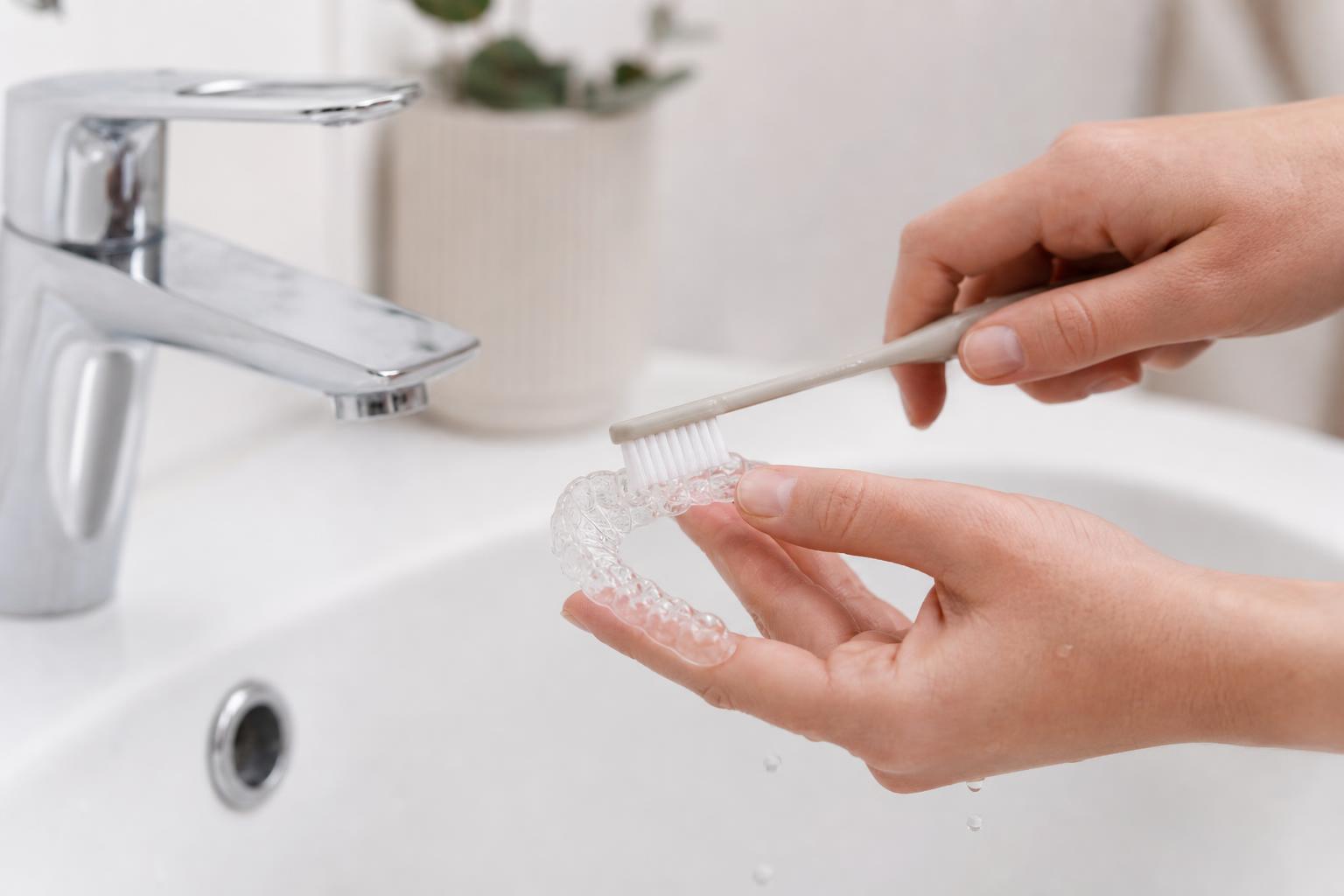
A retainer sits in your mouth for hours at a time, holding the result of months or years of orthodontic work. Cleaning it well is not just about freshness, it is about protecting your teeth, gums and the years of treatment you have already paid for. This guide walks through a calm, sustainable routine for clear, Hawley and permanent retainers, plus the common mistakes that quietly damage retainers and the signs it is time to replace one.
Why retainer hygiene matters
Saliva, food particles and oral bacteria form a sticky film called biofilm on every surface in your mouth, including your retainer. Left alone, biofilm hardens into tartar and traps the bacteria responsible for bad breath, gum inflammation and tooth decay. On a retainer, that same film also clouds the plastic, holds odours and can irritate the gums it touches.
The good news is that retainer cleaning is simple. A small consistent routine beats an occasional deep scrub.
Your daily routine
- Rinse the retainer under cool running water the moment you remove it. Dried saliva is much harder to clean off later.
- Brush it gently with a soft bristled toothbrush kept just for the retainer. Use cool water and a small amount of mild unscented soap or clear dish soap.
- Pay attention to the inner surfaces that touch your teeth and gums. This is where biofilm settles fastest.
- Rinse thoroughly and tap dry on a clean towel. Storing a retainer wet inside a closed case encourages odours.
- Store it in a ventilated retainer case when it is out of your mouth. Never wrap it in a tissue. Tissue is the single most common reason retainers end up in the bin by mistake.
Brush your teeth before you put a retainer back in. Putting a clean retainer on dirty teeth defeats the routine.
Your weekly deep clean
Once a week, give the retainer a proper soak. Options that are safe for most clear and Hawley retainers:
- Retainer cleaning tablets. Follow the time on the packet, usually 10 to 20 minutes.
- 50 percent white vinegar and 50 percent water. Soak for 15 to 30 minutes. Rinse very thoroughly afterwards to remove the smell.
- Denture cleaner labelled safe for retainers. Not every denture product is suitable, so check the label.
After soaking, brush gently with a soft toothbrush and mild soap, then rinse under cool water. If you wear two different retainers, alternate which one you soak so you always have a clean back up.
What to avoid
- Hot water. Even briefly warm water can warp clear plastic.
- Boiling, dishwashers and microwaves. Permanent damage.
- Toothpaste. Abrasives scratch retainer surfaces and trap bacteria.
- Mouthwash with alcohol or strong colouring. Dries out and stains the plastic.
- Bleach. Damages plastic, irritates gums and can be unsafe.
- Direct sunlight and hot cars. Heat warps the fit.
- Eating or drinking anything except water while wearing a clear retainer. Sugars and acids get trapped against your teeth.
Cleaning a Hawley retainer
Hawley retainers have a pink or coloured acrylic plate with a metal wire across the front teeth. The acrylic is slightly porous, so it holds odours and stains a little more easily. Daily brushing with mild soap and a weekly soak in a retainer cleaning tablet keeps a Hawley looking good for years. Avoid alcohol mouthwash and very acidic soaks, which can dull the acrylic over time.
Cleaning a permanent or fixed retainer
A fixed retainer is a thin wire bonded behind your front teeth. You cannot remove it, so cleaning happens in your mouth.
- Brush around it carefully morning and night with a soft brush.
- Floss under it every day. A floss threader, super floss or a small interdental brush helps you reach under the wire.
- A water flosser is a useful addition, especially for hard to reach areas, but does not fully replace traditional flossing.
- See your dentist or hygienist for routine cleanings on the schedule they recommend. Tartar build up around a fixed retainer is the main reason it eventually fails.
If a wire feels loose, sharp or detached, do not try to glue or trim it yourself. Book a clinical appointment promptly. Until then, wearing a back up clear retainer at night can help prevent your teeth from drifting.
Common mistakes that ruin retainers
- Wrapping the retainer in a napkin at a restaurant and accidentally throwing it away.
- Leaving it in a closed case wet, which encourages bacteria and smell.
- Cleaning it with toothpaste, which scratches the surface.
- Rinsing or soaking it in hot water.
- Letting a pet near the case. Dogs in particular love the smell.
- Skipping cleaning for weeks because it "looks fine". Biofilm is mostly invisible.
Signs it is time to replace your retainer
- Visible cracks or chips.
- It feels loose or no longer snaps into place.
- A permanent cloudy white film that does not respond to deep cleaning.
- A smell that returns within a day of cleaning.
- Sharp edges that catch on your gum or tongue.
- You have not had a retainer check in 2 or more years.
Replacement clear retainers are widely available through your orthodontist, and many clinics will scan you and ship a new set within 2 to 4 weeks. The cost is usually the local equivalent of 100 to 400 per arch.
A simple weekly schedule
- Every time the retainer comes out: rinse under cool water.
- Twice a day: brush gently with soft brush and mild soap.
- Once a week: soak in retainer tablet or 50 percent white vinegar for 15 to 30 minutes, then brush.
- Every 6 months: inspect for cracks, smell, fit, and book a dental check.
Looking after your retainers protects the time, money and patience you spent on treatment. For more on the wider topic, see our retainers hub and the broader aligner guide.
Frequently asked
Get the free Aligner Starter Kit
A short, printable PDF with our daily cleaning routine, a brace friendly food list and the exact product checklist we use ourselves. Free, no spam, and unsubscribe with one click whenever you like.