How to clean Invisalign aligners: a daily and weekly routine
By Mia Clark · Updated June 2026 · 9 min read
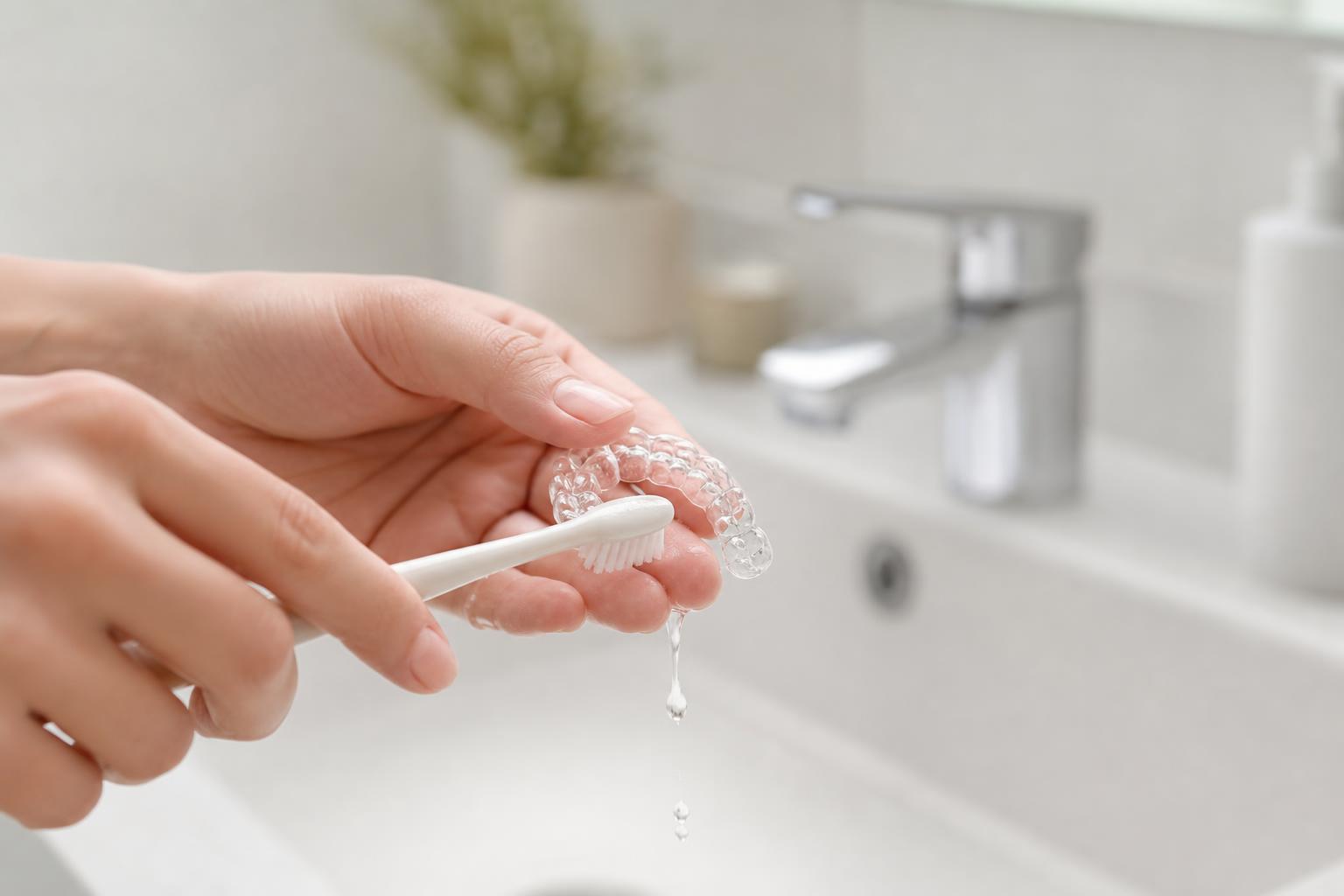
Clean Invisalign aligners feel like nothing in your mouth. Dirty ones smell, look cloudy and trap bacteria against your teeth for up to 22 hours a day. A simple daily rinse and gentle brush plus a weekly soak keeps trays clear, fresh and easy to wear. This guide covers exactly how to do it without damaging the plastic, the products worth buying and the habits that cause most aligner problems.
Why aligner hygiene matters
Your aligners hold saliva, food particles and oral bacteria against your teeth for most of the day. If they are not cleaned properly, that warm wet environment becomes a breeding ground for plaque, decay and the chalky white marks that often appear when patients finish treatment with poor habits. Good cleaning protects your teeth and stops your trays smelling.
Your daily routine
- Rinse the aligners under cool running water the moment you take them out. Dried saliva is much harder to remove later.
- Brush them gently inside and out with a soft bristled toothbrush kept just for aligners. Use cool water and a small amount of mild unscented soap or clear dish soap.
- Pay attention to the inner surfaces and around any attachments. This is where biofilm settles fastest.
- Rinse thoroughly and either put them back in or tap dry on a clean towel before storing them in a ventilated case.
- Brush and floss your teeth before putting clean aligners back in. Sealing food and plaque under a tray for hours is the fastest path to cavities.
Your weekly deep clean
Once a week, give your aligners a longer soak to lift biofilm and mineral deposits.
- Invisalign Cleaning Crystals. The brand's own product. Follow the time on the packet, usually 15 minutes.
- Retainer or aligner cleaning tablets. Widely available worldwide. Check the packet for compatibility with clear aligners.
- 50 percent white vinegar and 50 percent water. Soak for 15 to 30 minutes, then brush and rinse very thoroughly to remove any smell.
- Hydrogen peroxide 3 percent diluted 1 to 1 with water. A 15 minute soak helps with light staining and odour. Rinse well.
After soaking, always brush gently with a soft toothbrush and rinse under cool water before wearing them again.
What to avoid
- Hot water. Warps clear aligners almost instantly.
- Boiling, dishwashers and microwaves. Cause permanent damage.
- Toothpaste. Abrasive and scratches the plastic.
- Alcohol mouthwash and strongly coloured rinses. Dry out and stain aligners.
- Bleach. Damages plastic, irritates gums and is not safe.
- Direct sunlight and hot car dashboards. Heat warps the fit.
- Eating or drinking anything other than plain water with aligners in. Sugars and acids get trapped and stain the trays.
- Wrapping them in a tissue at restaurants. The most common reason aligners are thrown out by accident.
How to handle stains and smells
If your aligners look cloudy or develop a smell that returns soon after cleaning, work through this checklist:
- Rinse and gently brush them properly after every meal. Skipping this is the most common cause.
- Do a 20 minute weekly soak in a retainer cleaning tablet or 50 percent vinegar.
- Check that you are not drinking coffee, tea, juice or fizzy drinks with the aligners in.
- Switch to a fresh toothbrush. An old brush spreads bacteria.
- If the smell remains after a fresh tray, see your provider. Aligners can pick up odour from a tooth or gum issue that needs attention.
Travel and on the go cleaning
- Carry a small kit with a travel toothbrush, mini soft brush for the aligners, a small tube of mild soap and an extra case.
- Rinse aligners with cool bottled water if local tap water is heavily chlorinated or very hard.
- Avoid hot drink trains and outdoor temperatures above 35 degrees Celsius for stored trays in cars.
- If you cannot brush after a meal, swish water around your mouth and rinse the aligners before putting them back.
Attachments and how they change cleaning
Most Invisalign cases include small tooth coloured attachments bonded to certain teeth. They make trays harder to clean around because biofilm collects at the edges. Pay extra attention to the inside of the aligner where the attachment sits and brush around the attachment on the tooth itself. A water flosser is helpful for these areas, though it is not a replacement for flossing.
Signs it is time to switch to your next tray
- The smell returns within a day of cleaning.
- Visible cloudy white film that does not respond to soaking.
- Cracks at the edges where attachments sit.
- The tray no longer seats fully on the teeth.
Always follow your provider's tray schedule. Switching too early or too late can stall your treatment.
A simple weekly schedule
- Every time the tray comes out: rinse under cool water.
- Twice a day: brush gently with a soft brush and mild soap.
- Once a week: 15 to 30 minute soak in a safe cleaner, then brush.
- Every tray change: discard the old tray in the recycling and start the next clean.
Bottom line
Clean Invisalign aligners are clear, comfortable and almost invisible. Dirty ones are obvious and slow your progress. A short daily rinse and brush, a weekly soak and a few simple rules about heat, toothpaste and what you drink will keep your trays in good shape for the full length of treatment. For the wider picture, our aligner guide and does Invisalign work guide cover effectiveness and daily life on aligners.
Frequently asked
Get the free Aligner Starter Kit
A short, printable PDF with our daily cleaning routine, a brace friendly food list and the exact product checklist we use ourselves. Free, no spam, and unsubscribe with one click whenever you like.