Does Invisalign work? An honest look at clear aligner effectiveness
By Mia Clark · Updated June 2026 · 9 min read
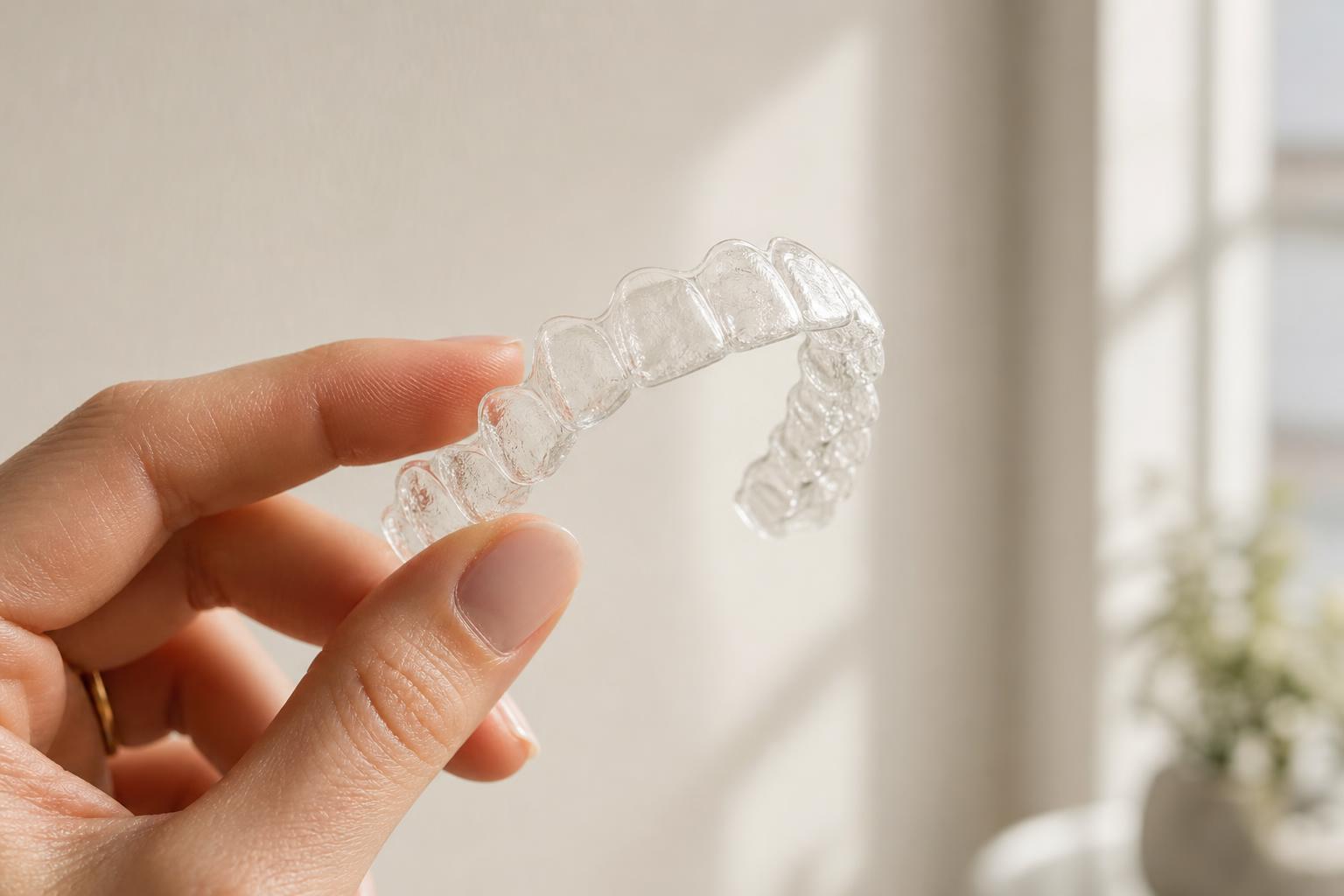
Yes, Invisalign works for the majority of mild to moderate orthodontic cases in adults and teens, with outcomes that closely match traditional braces when patients wear the trays as prescribed. The honest version of that answer is more interesting than the headline. Results depend less on the brand of plastic on your teeth and more on case selection, the clinician planning your treatment and how disciplined you are with wear time.
This guide pulls together what the published research says, what experienced orthodontists tell their patients in the chair and what real Invisalign wearers report after a year or more of treatment. The goal is to help you walk into your consultation with sharper questions and realistic expectations, not to sell you on any specific provider.
The short answer: when Invisalign works well
Clear aligners are most effective when they are used for the kind of tooth movement they were designed for. Across systematic reviews and clinical studies, Invisalign produces results comparable to fixed braces for the following cases:
- Mild to moderate crowding of the front teeth.
- Small to medium gaps and spacing issues.
- Relapse after a previous orthodontic treatment.
- Mild bite correction in patients with otherwise good skeletal alignment.
- Tipping movements and minor rotations.
For these cases, the average adult treatment finishes in roughly 12 to 18 months. Many patients describe the visible change in the front six teeth as obvious within the first three to four months, which is part of why aligners feel motivating to wear.
Where Invisalign struggles or needs help
No technology is universal. Clear aligners apply pressure through flexible plastic, which has natural limits compared to a rigid wire bonded to brackets. The cases where many orthodontists still favour braces, or use braces alongside aligners, include:
- Large rotations, especially of canines and premolars.
- Significant vertical movement, such as extruding a tooth into position.
- Severe bite problems with a skeletal component, including some overbites, underbites and open bites.
- Cases involving impacted teeth that need to be guided into the arch.
- Patients who genuinely cannot commit to 20 to 22 hours of daily wear.
In some of these cases an orthodontist may still offer aligners, but with auxiliary tools like attachments, elastics, buttons or short courses of fixed braces. That hybrid approach is normal and does not mean treatment is failing. If your provider proposes Invisalign for a complex case with no auxiliary plan, it is fair to ask why and to seek a second opinion.
What the research actually says
Independent reviews published in orthodontic journals over the last decade broadly agree on three findings. First, Invisalign achieves predictable results for arch expansion, intrusion of front teeth and small tipping movements. Second, it is less predictable than braces for large rotations and bodily movement of teeth through bone. Third, the gap between aligners and braces has narrowed substantially as the SmartTrack plastic, attachment library and treatment planning software have matured.
None of that should be read as a guarantee. Clinical trials average results across many patients, and your case is one data point. The strongest predictor of a good outcome in every study is wear time, followed closely by the experience of the treating orthodontist.
The discipline tax
Braces are unforgiving but they work whether you think about them or not. Invisalign rewards consistent habits and quietly punishes inconsistency. Most providers prescribe 20 to 22 hours of daily wear. In practice that means trays come out only for meals, hot or coloured drinks and brushing.
Patients who underestimate this part are the most common reason aligner treatments stall. Trays stop seating properly after two or three poor days, the next aligner will not fit, and refinement trays get added to the plan. Refinements are normal and built into most contracts, but repeated refinements add months and sometimes cost.
If you eat throughout the day, snack while working or keep a coffee on your desk, be honest with yourself about that pattern before you sign. A simple kitchen timer or app that tracks wear time is one of the most useful tools an aligner patient can buy in the first month.
How long does Invisalign take to work?
Movement begins on day one, although you will not see it. Within the first two to three weeks most people notice that their teeth feel slightly different against each other when they bite down. Visible change in the front teeth typically shows up between week six and month four, depending on starting position.
Typical timelines from clinical practice look like this:
- Minor crowding or relapse: 4 to 8 months.
- Standard adult case: 12 to 18 months.
- Complex case with refinements: 18 to 30 months.
- Teen case with growth considerations: 12 to 24 months.
These are averages, not promises. A consultation with a scan or set of records is the only way to estimate your specific timeline.
Common reasons Invisalign does not work for someone
When patients say Invisalign did not work for them, the cause usually falls into one of four buckets:
- Case complexity was outside what aligners do well, and the original plan was over optimistic.
- Wear time fell well below 20 hours a day for weeks at a time.
- Attachments fell off and were not promptly rebonded.
- Retainers were not worn after treatment and teeth drifted back within months.
Almost none of these failures are caused by the plastic itself. Choosing a provider who does a lot of complex cases, asking how often refinements are included and reading your treatment contract carefully will prevent most of them.
Invisalign vs other clear aligner brands
Invisalign is the most studied clear aligner system and works with orthodontists in person. Mail order aligner brands typically skip the in person clinical exam and use remote monitoring. For very simple cosmetic cases this can work, but the lack of hands on supervision is the single biggest reason these systems have a higher complaint rate.
If you are considering a mail order brand, ask how a tooth or root resorption problem would be diagnosed without an in person exam, and what happens if your case turns out to be more complex than your photos suggested. A clear answer is reassuring. A vague one is a red flag.
What to ask at your consultation
A good consultation should leave you feeling informed, not pressured. Useful questions to bring with you include:
- Is my case suited to Invisalign, braces or a combination?
- How many cases like mine have you treated in the last year?
- How long do you expect treatment to take, and what could extend it?
- Are refinements included in the quoted price, and how many?
- What is your protocol if I lose a tray or an attachment falls off?
- What kind of retainer will I need afterwards, and for how long?
If you are weighing options between providers, the answers to these questions usually matter more than a small difference in price.
Bottom line
Invisalign works for most adults and teens with mild to moderate orthodontic needs, and it works well when you commit to wearing your trays as prescribed and choose a provider experienced enough to recognise when aligners alone are not the right tool. The technology is not magic and it is not a marketing gimmick either. Treat it as a serious medical device that asks something of you in return for a less visible treatment experience.
If you are still unsure, a second consultation costs you an hour and gives you a much clearer picture. For a side by side breakdown of daily life on each option, see our Invisalign vs braces guide for adults.
Frequently asked
Get the free Aligner Starter Kit
A short, printable PDF with our daily cleaning routine, a brace friendly food list and the exact product checklist we use ourselves. Free, no spam, and unsubscribe with one click whenever you like.