How much does Invisalign cost? A worldwide price guide
By Mia Clark · Updated June 2026 · 11 min read
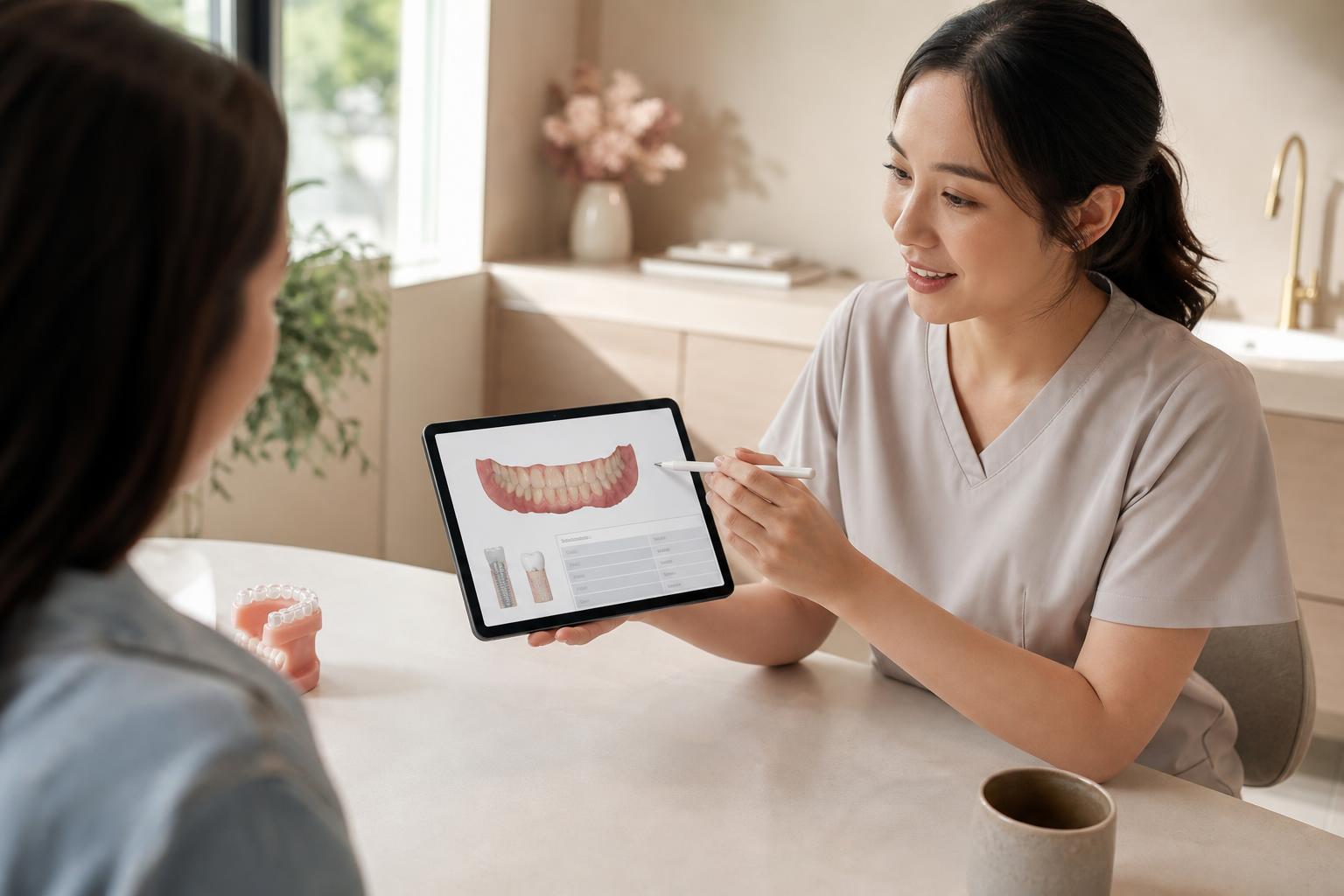
Most adults pay between roughly 2,500 and 8,500 US dollars for a full course of Invisalign, depending on country, city, case complexity and the experience of the orthodontist. That is a wide range, and the honest answer is that no clinic can give you a real number until they have looked at your teeth. This guide explains what actually drives the price, what typical quotes look like in major markets and how to read a treatment plan so the final bill does not surprise you.
ClearlyBraced is an independent education site, not a clinic. We do not sell Invisalign and we do not earn commission from providers. Every price band below is a real world average pulled from published price lists, dental association surveys and patient reports, rounded to keep the picture clear.
Typical Invisalign price ranges by country
Prices below are for a full Invisalign Comprehensive case in 2026, including scans, trays, attachments, refinements and at least one set of retainers. Lite or Express plans for simple cases cost less. Complex cases needing many refinements or auxiliary work cost more.
- United States: 3,500 to 8,000 USD. Average around 5,000 USD.
- Canada: 3,500 to 8,500 CAD. Average around 5,500 CAD.
- United Kingdom: 2,500 to 5,500 GBP. Higher in London.
- Ireland: 3,000 to 6,000 EUR.
- Germany, France, Netherlands, Belgium: 3,000 to 6,500 EUR.
- Spain, Portugal, Italy: 2,500 to 5,500 EUR.
- Nordics: 35,000 to 70,000 SEK or NOK equivalents.
- Australia: 4,500 to 9,000 AUD. Higher in capital cities.
- New Zealand: 5,500 to 9,500 NZD.
- United Arab Emirates: 12,000 to 25,000 AED.
- Singapore: 4,500 to 9,000 SGD.
- Hong Kong: 35,000 to 70,000 HKD.
- South Africa: 35,000 to 75,000 ZAR.
- India: 150,000 to 350,000 INR in major cities.
- Mexico: 35,000 to 75,000 MXN.
- Brazil: 12,000 to 25,000 BRL.
These figures are typical for adults paying privately. Teens often cost the same or slightly less because their treatment is sometimes shorter, but providers may add a small fee for compliance indicators on teen trays.
What actually drives the price
Two patients in the same city can be quoted very different prices for what looks like the same product. The biggest factors are usually:
- Case complexity. Simple front tooth crowding needs fewer trays than a full bite correction. More trays means more lab work and chair time.
- Treatment package. Invisalign comes in tiers such as Express, Lite, Moderate and Comprehensive. Each has a different maximum number of trays and a different list price.
- Refinements. Most adults need at least one round of refinement trays. Good clinics include several rounds in the quoted price. Others charge per round.
- Clinician experience. A specialist orthodontist who treats hundreds of Invisalign cases a year usually charges more than a general dentist doing a handful. The price difference often pays for itself in fewer surprises.
- Local cost base. Rent, staff salaries and lab fees in central London, New York, Sydney or Singapore are simply higher than in smaller towns.
- Retainers and follow up. Some clinics include the first set of retainers, others sell them separately at 200 to 500 in local currency.
How to read a treatment quote
A clear quote should list every line item separately so you can compare clinics fairly. Look for:
- Initial scan, X rays and consultation fee, or a note that they are included.
- Number of aligners and the Invisalign tier you are being prescribed.
- How many rounds of refinements are included, and the price per round after that.
- Number of in person reviews and any virtual check ins.
- Whether the first set of retainers is included, and the price of replacements.
- What happens if you lose or break a tray.
- Total fee, payment schedule and any finance charges.
If a quote is a single round number with no breakdown, ask politely for one. A good provider will not mind.
Insurance, healthcare systems and tax friendly accounts
Coverage varies enormously by country and policy. A short summary:
- United States: many employer dental plans include an orthodontic lifetime benefit of 1,000 to 3,500 USD. HSA and FSA accounts can usually be used for the remainder.
- Canada: private dental plans often include 50 percent up to a lifetime cap of 1,500 to 3,000 CAD.
- United Kingdom: NHS adult orthodontics is rare and never covers Invisalign for cosmetic reasons. Private dental plans may give a small annual contribution.
- Australia: private health funds with major dental extras typically pay 800 to 2,500 AUD per calendar year toward orthodontics, subject to waiting periods.
- EU countries: most public systems do not cover adult orthodontics. Private health insurance sometimes does at 50 to 80 percent.
- UAE and Singapore: some employer health plans include dental extras that can apply to orthodontics. Always check.
Whatever your market, ask the clinic for an itemised invoice in the format your insurer requires. A small admin step at the start can save weeks of back and forth later.
Payment plans and finance
Almost every clinic in every country offers a monthly payment plan. Common patterns:
- A deposit of 10 to 25 percent paid up front.
- Monthly payments spread over 12 to 24 months at zero or low interest.
- Third party medical finance for longer terms, sometimes at standard consumer loan rates.
Before signing, ask what happens if your case finishes early, if you move away mid treatment, or if you stop wearing your trays and the plan is abandoned. The contract usually answers all three.
Are cheap online aligners a real alternative?
Mail order clear aligner brands often advertise headline prices well below clinic Invisalign. They can suit very mild cosmetic cases, but they skip the in person clinical exam and ongoing supervision. Worldwide regulators including the FDA, the UK General Dental Council and the Australian Dental Board have all flagged concerns about cases worsened or harmed by remote only treatment. The lower upfront price is real, but so is the risk if your case turns out to be more complex than your photos suggested.
For a side by side breakdown, our Invisalign vs braces guide for adults and Does Invisalign work effectiveness guide are good next reads.
Honest ways to lower the bill
- Get two or three written quotes from experienced providers before signing.
- Ask whether your case suits a shorter Invisalign Lite or Express plan.
- Use every insurance, HSA, FSA or health fund benefit you have.
- Ask whether a nearby dental school or teaching hospital offers supervised treatment at a lower fee.
- Be wary of unusually cheap offers. Quality of planning matters more than the discount.
What to ask before you sign
- What Invisalign tier are you recommending, and why?
- How many refinement rounds are included in this price?
- What is the price for extra refinements, lost trays, broken attachments and replacement retainers?
- How many cases like mine have you treated in the last year?
- How long do you expect treatment to take, and what could extend it?
- What is your protocol if I move country or change providers mid treatment?
Bottom line
Invisalign sits in the mid to upper range of orthodontic pricing worldwide. A typical adult will spend the equivalent of 2,500 to 8,500 US dollars, with the final number shaped by case complexity, country, clinician and how complete the package is. Always insist on an itemised quote, compare two or three providers and treat any unusually low or unusually high outlier with the same healthy scepticism. Cost matters, but a good clinician who finishes your case cleanly is almost always the cheapest option in the end.
Frequently asked
Get the free Aligner Starter Kit
A short, printable PDF with our daily cleaning routine, a brace friendly food list and the exact product checklist we use ourselves. Free, no spam, and unsubscribe with one click whenever you like.