How to floss with braces: tools, technique and a daily routine
By Mia Clark · Updated June 2026 · 9 min read
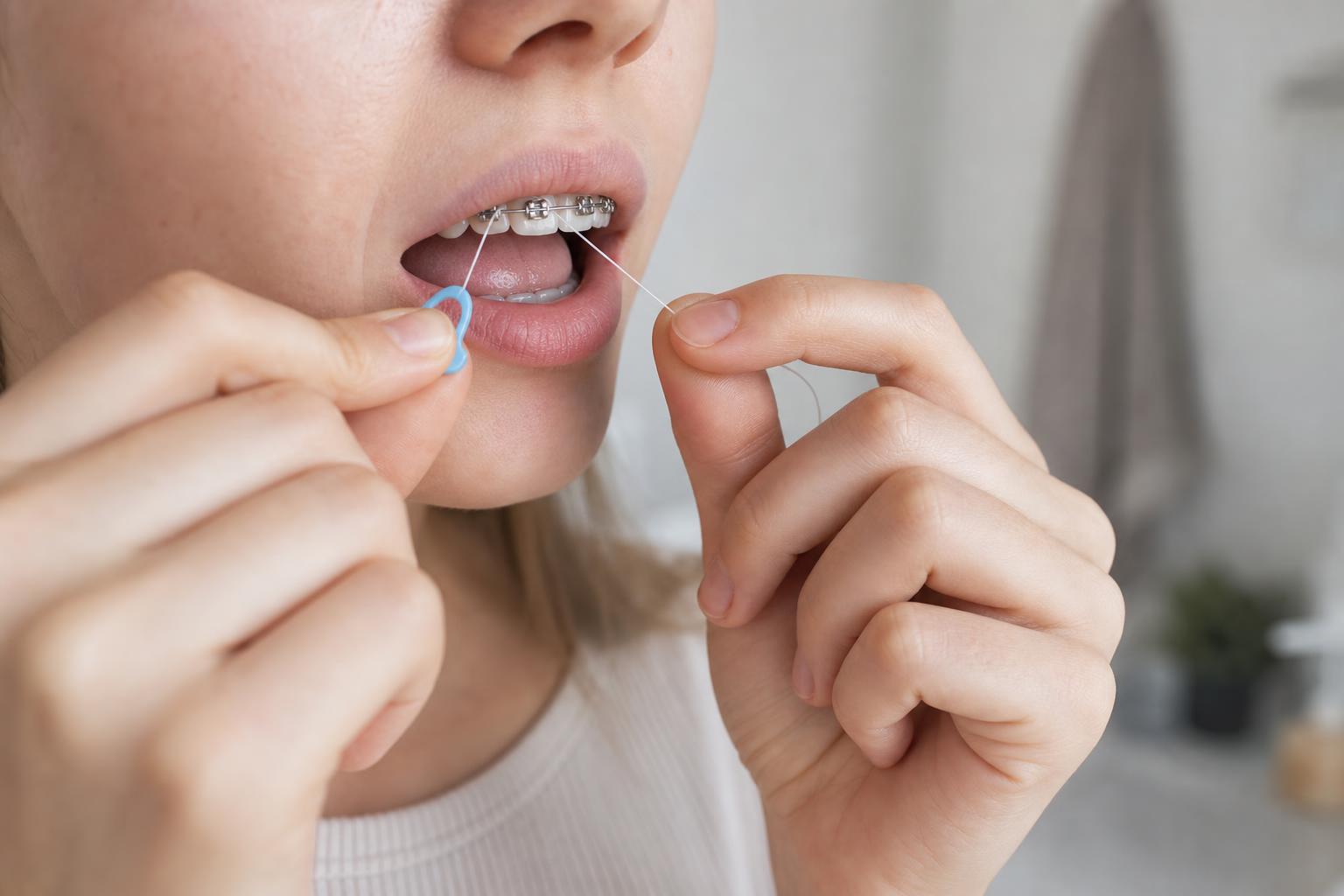
Flossing with braces takes a few extra minutes, the right tool and a routine you can keep. The reward is healthy gums, fewer cavities and a clean smile when the braces come off. This guide explains the tools that genuinely make flossing easier, the technique that works once you get used to it and a simple routine that fits into a busy day.
Why flossing matters even more with braces
Brackets and wires create extra surfaces for plaque to cling to and make it harder for saliva and your brush to clean between teeth. If you skip flossing for weeks, plaque hardens into tartar around brackets and along the gumline. The result is gum swelling, bleeding and, after months, the chalky white decalcification marks that appear on teeth when braces are removed. Most of these problems are entirely preventable with daily flossing.
The four tools worth knowing
- Floss threaders. A small loop of stiff plastic, like a sewing needle for floss. You thread normal waxed floss through the loop, slide it under the wire and floss as usual. Cheap, available in any pharmacy, and the easiest tool to learn with.
- Super floss. Pre cut strands with a stiff end that does the threader's job, a spongy middle that lifts plaque from around brackets and a regular floss tail for between teeth. Faster than threaders once you get the rhythm.
- Interdental brushes. Tiny bristled brushes you slide between teeth and around brackets. Great for larger gaps and quick clean ups after meals. Not a full replacement for flossing.
- Water flossers. Devices that pulse water between teeth and around the braces. Excellent for flushing trapped food and reducing gum inflammation. Best used in addition to traditional flossing rather than instead.
Step by step with a floss threader
- Cut a piece of waxed floss about 45 cm or 18 inches long.
- Pass one end of the floss through the loop of the threader.
- Pass the pointed end of the threader up and under the archwire between two teeth.
- Pull the threader through. You now have floss running under the wire and between the two teeth.
- Wrap the ends gently around your index fingers and slide the floss up the side of one tooth and down the side of the other in a gentle C shape.
- Pull the floss back out from under the wire and move on to the next gap.
- Use a fresh section of floss as you go to avoid moving plaque from one gap to another.
Start at the back of one side of your mouth and work in the same order every night. Repetition is what makes the routine fast.
Step by step with super floss
- Push the stiff end up between two teeth and under the wire.
- Pull the floss through until the spongy section is under the wire.
- Move the spongy part gently back and forth to clean around the brackets and the inside of the wire.
- Use the regular floss tail to clean down each side of the gap in a C shape.
- Pull it out and move on. Discard each strand once it stops feeling clean.
Using a water flosser well
- Fill the reservoir with warm water. Lean over the sink with your mouth slightly open.
- Start on the lowest pressure setting. Higher is not better when you are starting out.
- Aim the tip at a 90 degree angle to the gumline and pause for 1 to 2 seconds at each space between teeth.
- Run the tip along the top and bottom of the wire and around each bracket.
- Finish in 1 to 2 minutes once you have covered the full mouth.
A water flosser does not replace traditional flossing, but it makes the rest of the routine more effective and is a genuinely useful tool, especially after meals.
Common mistakes
- Snapping floss hard into the gum. Always slide gently to avoid cuts.
- Using the same short piece of floss for every gap.
- Skipping the back teeth because they are awkward. They are the highest risk for decay.
- Brushing immediately after eating something acidic. Wait 30 minutes to protect enamel.
- Relying on a water flosser alone. It helps but does not lift sticky plaque from tooth surfaces.
- Quitting after a week because your gums bleed. Mild bleeding usually means flossing is needed more, not less. Persistent bleeding deserves a check.
A realistic daily routine
Pick the simplest version you will actually do every day.
- Morning: brush 2 minutes with fluoride toothpaste using a soft brush. Rinse and quickly inspect for any food caught from breakfast.
- After lunch or coffee: rinse the mouth with water and use an interdental brush or a quick water flosser pass if available.
- Evening: brush 2 minutes, floss the full mouth with a threader or super floss, run a water flosser if you use one, and finish with a fluoride mouthwash if your dentist recommends it.
What to expect in the first 2 weeks
The first time you floss with braces it will feel awkward and slow. Most people are noticeably faster by day 5 and back to a comfortable rhythm by day 14. Gums often bleed lightly at first and settle within 1 to 2 weeks of consistent flossing. By week 3, the routine becomes a habit and adds only a few minutes to your evening.
When to ask for help
- Heavy or painful bleeding that lasts more than 2 weeks.
- Visible white marks or chalky patches near brackets.
- Persistent bad breath after a full clean.
- A bracket that catches the floss in a way it did not before.
- Receding gums or noticeable swelling.
Your orthodontist or dental hygienist can demonstrate technique on your own teeth in a few minutes, which is often the fastest way to improve.
Bottom line
Flossing with braces is not as hard as it first looks. A floss threader and waxed floss cost very little and cover the entire job. Add a water flosser if you want extra comfort and after meal clean ups. Keep the routine short, consistent and at the same time each day, and the braces come off cleaner, whiter and healthier than they went on. For the wider routine, see our oral care hub.
Frequently asked
Get the free Aligner Starter Kit
A short, printable PDF with our daily cleaning routine, a brace friendly food list and the exact product checklist we use ourselves. Free, no spam, and unsubscribe with one click whenever you like.